Utility Meets Opportunity: How to Make the Most Out Of Extra Bandwidth
How two entrepreneurs turned underutilized bandwidth into a business
In 2020, Shawn Hlookoff’s touring schedule went dark during the pandemic. A multi-platinum recording artist and songwriter who had spent 15 years between Los Angeles and Canada, he found himself at home with time to think.
The stillness suited him. Hlookoff had trained as an engineer before music (first at Selkirk College in British Columbia, then at the Art Institute of Vancouver) and had a passion for the science of signal flow and audio architecture. When he started learning about the concept of decentralized wireless networks, something clicked.
He began to build out early Helium Network deployments across Western Canada and California. A few years later, he knew he needed a partner to scale. He called David Hudson.
Hudson, based in Montecito, CA, had spent years in short-term rental management. When Hlookoff sent him the pitch deck, he was in immediately. Between Hlookoff’s technical fluency and Hudson’s skill for establishing trust in business relationships, the company took off.
The Model
About six months ago, Hudson House shifted focus entirely to Helium deployments and began building on existing infrastructure rather than building from scratch. “That’s when utility met opportunity,” Hlookoff said. The model is deliberately low-friction: no capital expenditure for the venue, a half-hour implementation, and Hudson House manages everything, sending participating locations a monthly monetization check while improving their connectivity.
The monetization checks come from the carrier offload mechanic at the heart of the Helium Network. When a venue’s guests connect through the Helium Network, major wireless carriers pay per gigabyte of data offloaded through that connection. For venues already paying for bandwidth they aren’t fully utilizing, that throughput potentially becomes a source of income rather than a sunk cost.
Who’s It For?
Hudson frames the pitch as an extension of the real estate relationship. The conversation with landlords goes something like this: you have an underutilized asset, we’ll manage it, here’s what you get out of it. “It’s really about being transparent, personable, and trustworthy,” he says. Some prospects need convincing: the model can sound, as he puts it, “like talking to people about the internet in 1997.” Not every venue signs, but for a business already paying for bandwidth it isn’t fully using, a bill offset and better guest coverage tend to make for an attractive offer.
For larger venues like a medical facility, concert hall, or restaurant group, the calculus is simple. Eliminating dead zones, Hlookoff notes, improves dwell time and removes a friction point that operators often didn’t realize they were absorbing.
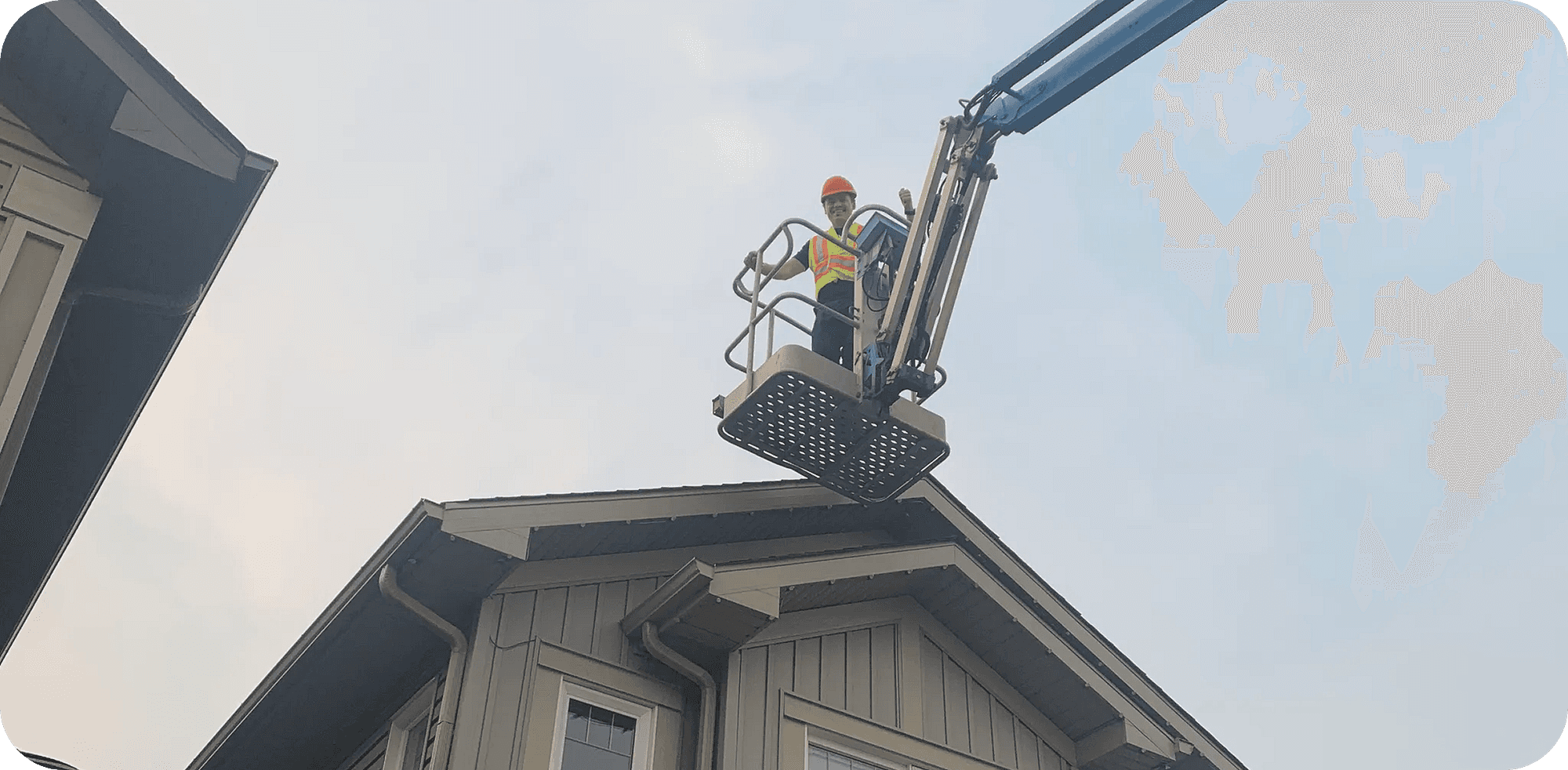
Hudson House currently works with partners across hospitality, food service, higher education, and medical real estate, including Palmetto Superfoods, Fire Wings, the Montesano Group’s restaurant portfolio (Lucky’s Steakhouse and Tre Lune), and Finney’s Crafthouse. A larger, unnamed partner with more than 400 U.S. locations is currently in a pilot phase. The company’s goal is to have at least 5,000 locations in its portfolio before the end of the summer.
The Bottom Line
“The utility and the opportunity make sense,” Hlookoff says. “We’re actually providing something real.”
To work directly with Hudson House, reach out to david@hudsonhouse.io.
To learn more about Helium, email us at business@helium.com.