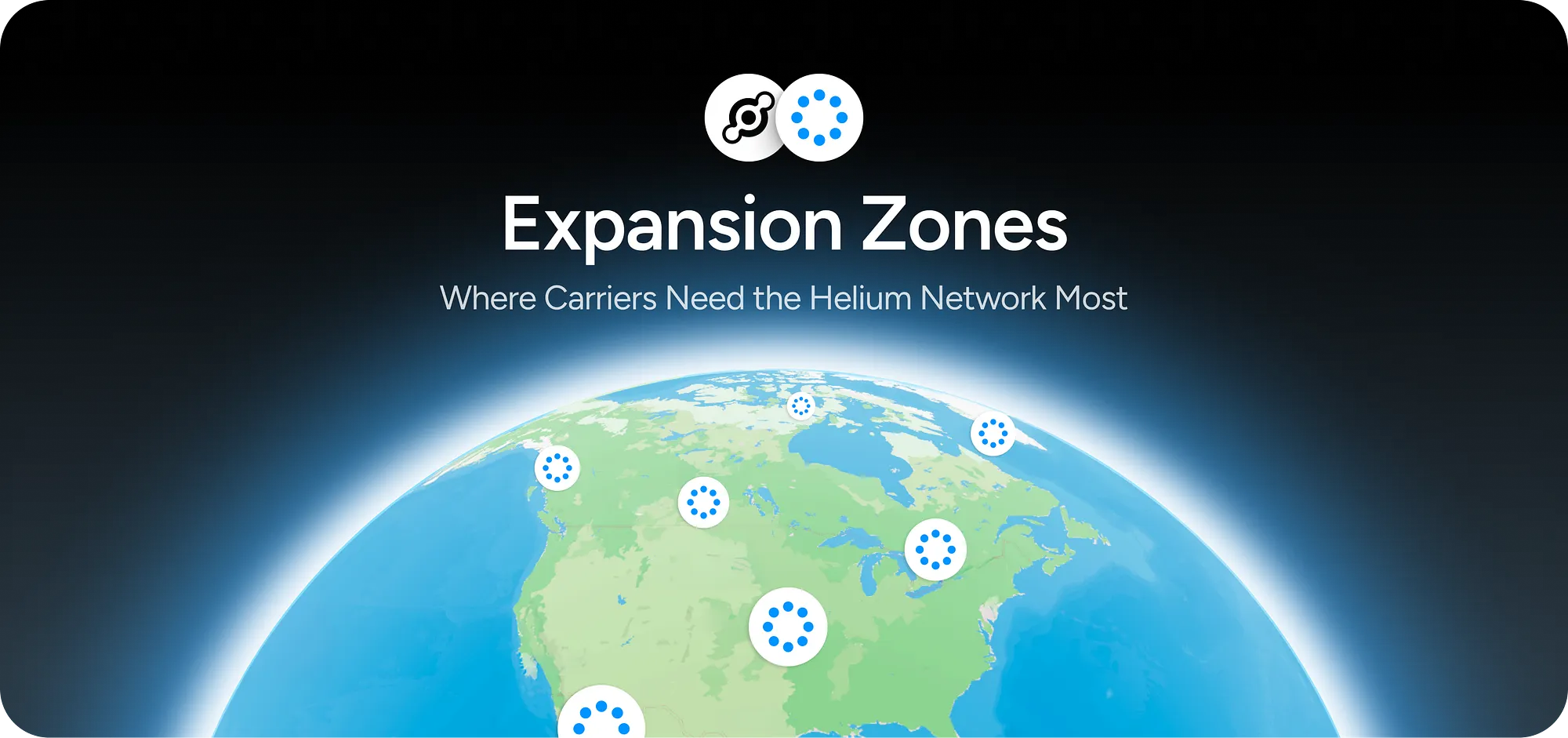
Expansion Zones: Where Carriers Need the Helium Network Most
Now live in Helium World: new Expansion Zones, which show exactly where carriers want more coverage and, by extension, exactly where your next Hotspot should go.
What Are Expansion Zones?
Expansion Zones are geographic areas in Helium World where carriers have identified unmet demand for mobile coverage. In other words, the places where people are trying to text, call, and stay connected, and their networks aren’t keeping up.
For a carrier, building a cell tower to serve every high-need location isn’t always profitable, efficient, or practical. Expansion Zones mark exactly those gaps: areas where carriers have identified demand but are looking to the highly efficient, people-built Helium Network to fill it. For builders, that’s a direct signal: this is where a Hotspot belongs.
Recent industry news reports that carriers are pulling back on how much they spend to build their own network infrastructure.
Why Expansion Zones Matter for Builders
Every builder of the Helium Network wants the same thing: a Hotspot that earns. The biggest variable in that equation has always been location placement. Specifically, whether that placement is useful for mobile users and somewhere carriers are actively trying to offload data traffic from their own customers.
Expansion Zones change that calculus significantly. Here’s why:
Demand is already confirmed. These aren’t speculative coverage gaps. Carriers have analyzed their data and identified these areas as high-priority. That means the mobile traffic is already there. The Helium Network just needs to be deployed.
Hotspots set up inside Expansion Zones are more likely to be rapidly selected for carriers to offload subscribers. More offload means more data transfer. More data transfer means the potential to earn more HNT rewards.
The Helium Network is people-built infrastructure that serves real carriers with real subscriber bases. Expansion Zones give the builder community direct visibility into exactly where carriers need coverage most.
How to Use Expansion Zones
Check out Helium World and look for Expansion Zones on the map.

If you’re evaluating a Hotspot deployment location, check whether it falls inside an Expansion Zone. And, especially if you’re just starting to explore the Helium Network as a builder, this is a good place to begin: you’ve got a specific, carrier-informed answer to the question every Helium builder should ask first: where is the Helium Network actually needed?
The Bigger Picture
The Helium Network was built on a simple idea: wireless infrastructure doesn’t have to be centralized, capital-intensive, and slow. A people-built, HNT-incentivized network can fill gaps that traditional carriers can’t. And, increasingly, those carriers are proving it by offloading real subscriber data across Helium Hotspots every day.
Expansion Zones deepen that relationship. They create a tighter feedback loop between what carriers need and where the Helium community deploys. The Network becomes more useful to carriers. Builders get clearer direction. Data transfer goes up across the board.
That’s the flywheel. Expansion Zones are how we turn it faster.
New Expansion Zones Drop Each Week
Each week, roughly 1,000 new Expansion Zones drop in Helium World. Follow us to stay in the loop and get first look at where to deploy next.
So, are you ready to deploy your next Hotspot?