Bringing the Signal to Band Camp: How Ace Tomato Kept the Music Playing
How 13 permanent Hotspots handled a 33x surge at one of Florida's biggest music festivals.
Every spring, tens of thousands of people converge on a plot of land in central Florida for four days of music, heat, and very poor cellular service.
Okeechobee Music & Arts Festival is a large event in a small town. And when the festival crowds arrive, the connectivity demand is sudden, dense, and unrelenting: streaming sets, navigating the grounds, posting in real time, RFID badges, vendor sales, and all the other invisible infrastructure that makes a festival run smoothly
This year, Helium’s data tells a different story.
Establishing the Baseline
The 13 Hotspots deployed at the Okeechobee festival grounds aren’t temporary deployments. They are year-round, permanent installations that run through the off-season, serving the low-level but consistent connectivity needs of a rural community.
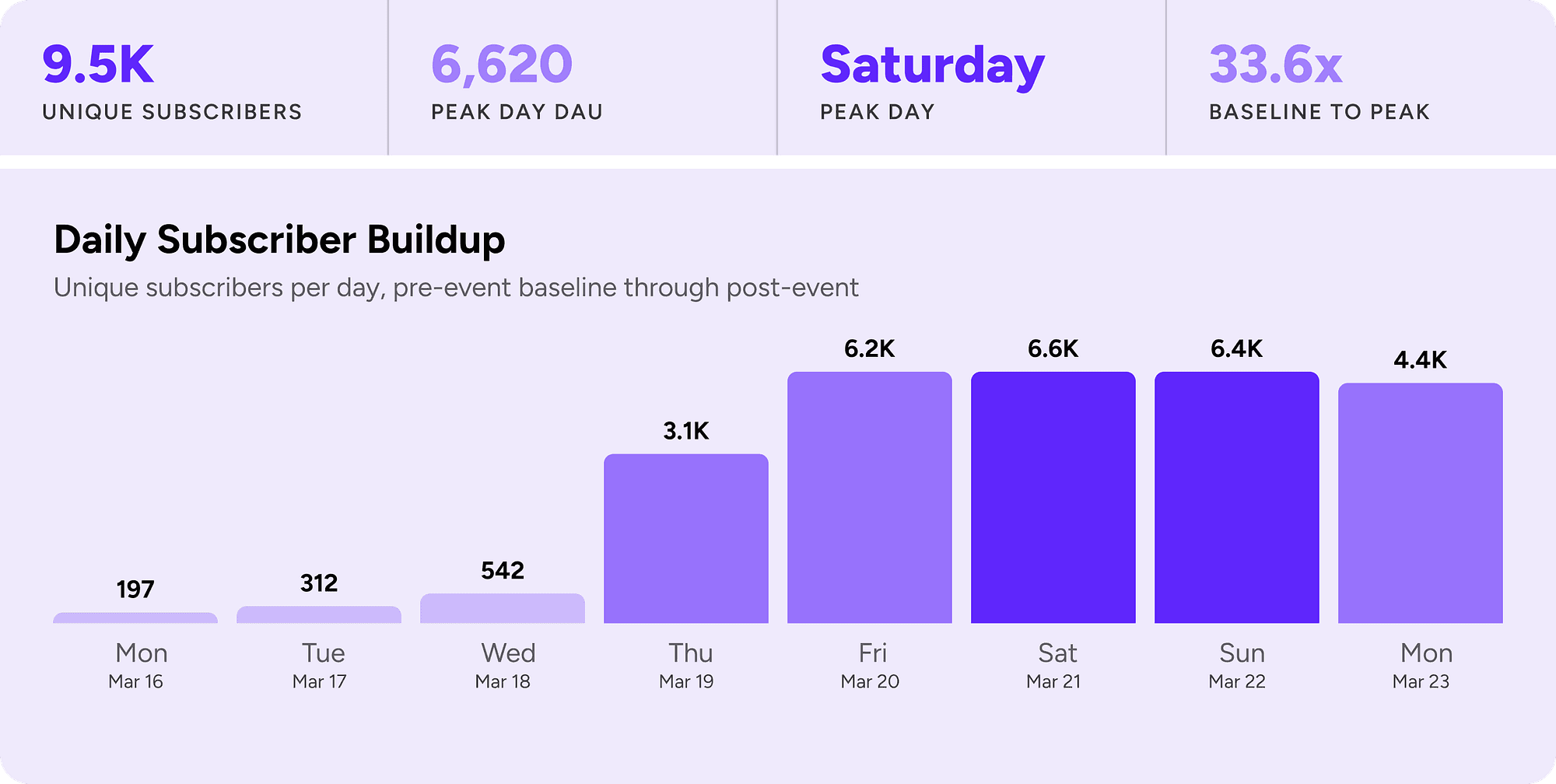
The numbers show that the week before the festival, traffic was pretty light. On Monday, March 16th, the Network served 197 unique subscribers. Tuesday that rose to 312, and 542 by Wednesday. A steady, unremarkable baseline: exactly the kind of low-traffic environment that makes what followed more striking.
The Inflection Point
Thursday, March 19, 2026 was opening day.
Overnight, as the festival crowd arrived, unique subscribers connecting to the Helium Network jumped 469%, from 542 to 3,084.
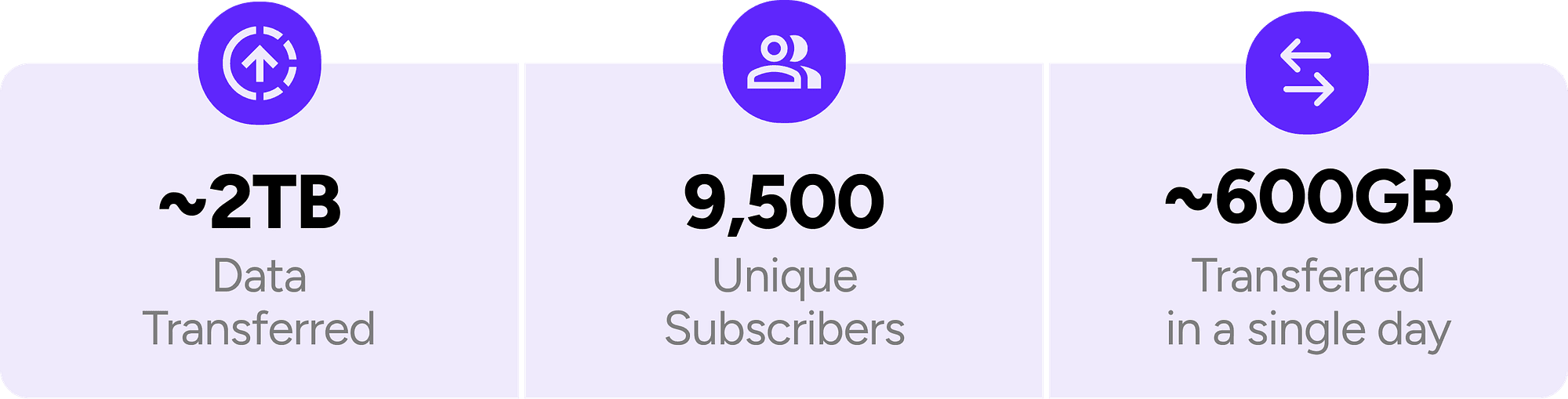
By Friday, the Network had nearly doubled again, reaching 6,225 unique subscribers and processing 599.6 GB of data in a single day. Saturday peaked at 6,620. Sunday held at 6,361.
Across all three peak days, the Network sustained between 6,200 and 6,600 daily unique subscribers without degradation.
What the Numbers Show
While traffic spiked, the connectivity held up consistently.
From a Monday baseline of 197 to a Saturday peak of 6,620, the Network scaled 33.6 times over the course of a week.

Total unique subscribers across the event window reached 9,500. Total data processed over the four festival days exceeded 1,900 GB.
By post-festival Monday, unique subscribers had already begun winding down to 4,368 as attendees departed. The sharp symmetry of the buildup and cooldown reflects what the data consistently shows at large events: demand is event-driven, and it moves fast in both directions.
What Made It Work
The Hotspots at Okeechobee belong to Ace Tomato, a managed wireless deployer with many years of experience building networks for high-density, high-variability environments.
Because the infrastructure was already in place, the Network didn’t have to catch up to demand. It was ready when Thursday arrived.
That permanence is the point. Year-round Hotspots generate year-round data, year-round coverage, and year-round utility. The festival was the stress test, and the Network passed it.
What It Means
Large events compress weeks of network demand into days. The question isn’t whether demand will spike, it’s whether the infrastructure underneath can absorb it.
At Okeechobee, 13 Hotspots handled a 33x surge across four continuous days of peak traffic. Each session represents a data credit consumed, a deployer rewarded, and a phone that stayed connected when it otherwise might not have.
Learn more
To learn more about Helium, visit world.helium.com or email business@helium.com.