Hosting a Mid-sized Festival With 70,000 People? You’re Gonna Need Helium for That
The Helium community has spoken, and the Helium World team has been listening.
When you walk into a major music festival and scan your RFID wristband to buy a drink, you probably aren’t thinking about VLAN architecture, DHCP scopes, or fiber backhaul.
Chad Wachs is.
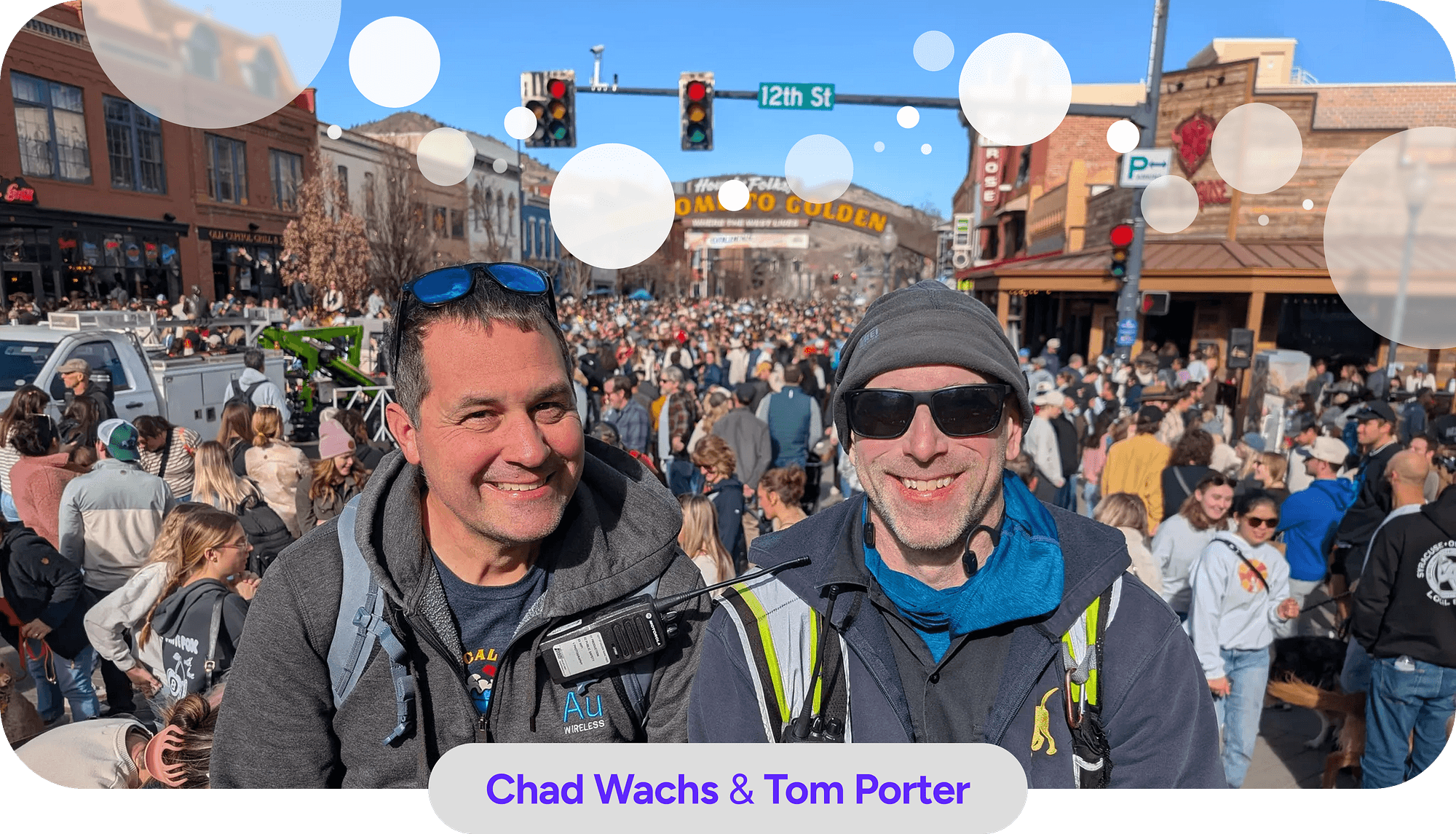
Wachs and his longtime business partner Tom Porter, both founders of Ace Tomato, have spent decades building high-powered networks in places where infrastructure doesn’t exist, or simply isn’t robust enough to handle a huge influx of visitors.
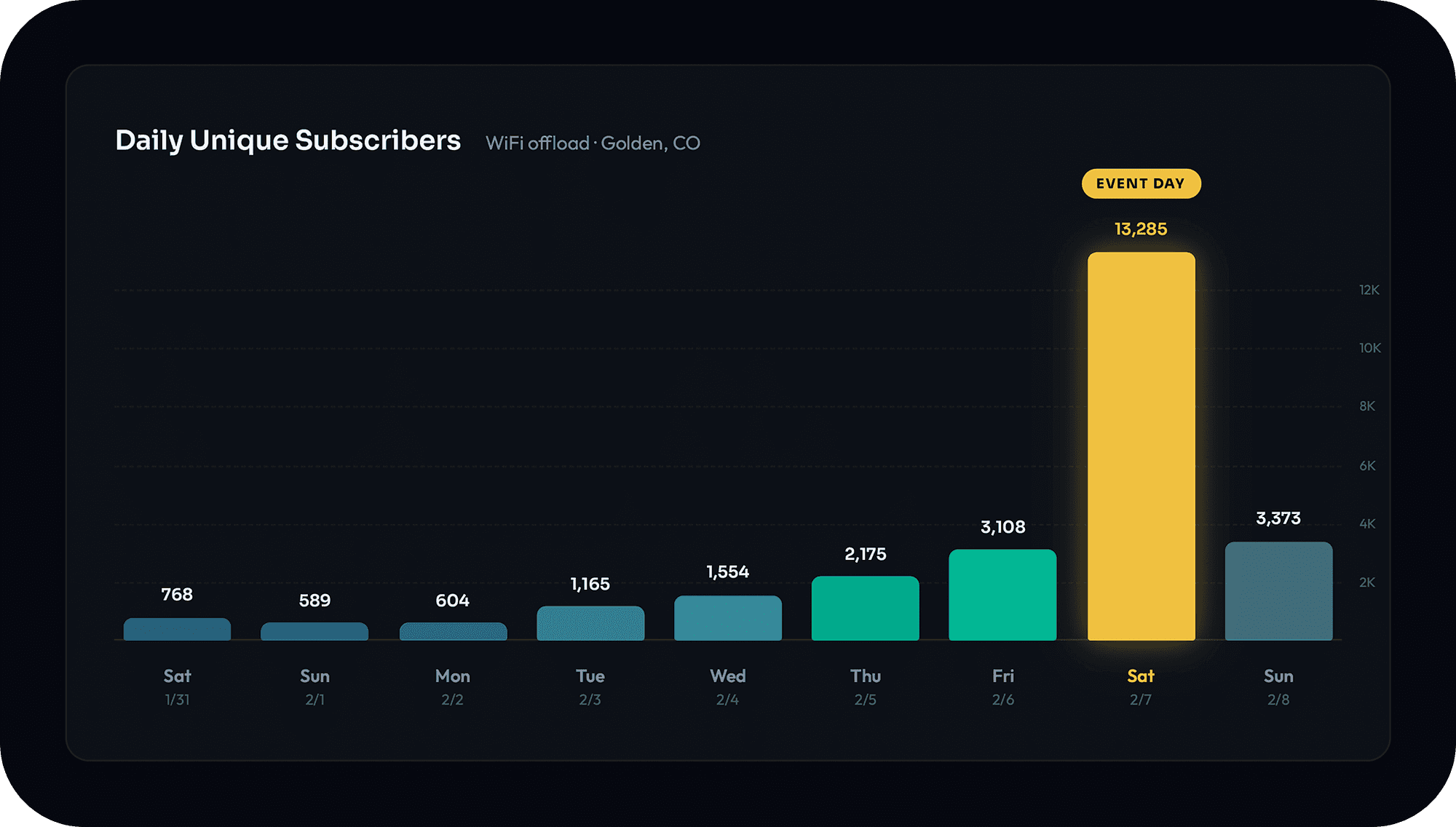
Take Wachs’ current home base of Golden, Colorado, for example. On February 7, the town of 22,000 had 20,000 visitors (and 4,000 golden retrievers) during its annual Goldens in Golden festival. On its own, the local cellular network would be too overwhelmed to support that many visitors. Without reliable connectivity, critical systems such as RFID wristbands, point-of-sale systems for vendors, lighting controls from the sound stage to the walking paths, and communications with security personnel can malfunction or grind to a halt.
Helium deployments kept tails wagging and made sure the event continued to function without a hitch. At peak traffic, a single Helium access point was handling just under 1,000 simultaneous device offloads from local cellular and Wi-Fi networks. That meant phones, wearables, and other connected devices were using the Helium Network to send and receive data when the overloaded cell towers and guest Wi-Fi systems could not keep up.
Building Networks for Festivals and Brick-and-Mortar Venues
Wachs and Porter got their respective starts in the wireless industry building two different kinds of networks. Porter has been building temporary networks for major music festivals since the late 90s, including events like Bonnaroo, Lollapalooza, and the Chicago Marathon. Wachs ran a wireless internet service provider in Golden for ten years before exiting, retaining a large portfolio of smaller businesses in fixed locations.
Together they’ve built a business that spans both worlds: temporary networks for festivals and pop-up events, plus year-round deployments at coffee shops, bars, and restaurants.
The festival work can get especially technical. For a three-weekend event in Golden Gate Park, Porter’s team deploys roughly 250 access points across hundreds of acres in Golden Gate Park. The network supports real-time RFID security lookups, point-of-sale systems for vendors, lighting control systems, and video transport. The setup takes three weeks, and once the network is up, it has to work flawlessly. There’s no room for downtime when tens of thousands of attendees are scanning RFID bracelets to move through security or buy food.
For larger festivals, cellular carriers deploy COWs (“Cell on Wheels,” temporary cell towers on trailers with dedicated fiber backhaul). But for medium-sized festivals in the 10,000 to 70,000 range, carriers don’t see the ROI.
That’s where Helium fits.
Ace Tomato already builds vendor Wi-Fi networks for these events. By integrating Helium into those deployments, they add an additional layer of connectivity that can absorb excess device traffic when guest Wi-Fi and overloaded cell towers fall short. This approach provides scalability without requiring a completely separate network build.
Moving away from guest Wi-Fi networks to Carrier Offload
Over the years, Wachs has watched guest Wi-Fi usage decline. “Ten years ago, everyone would log into guest Wi-Fi,” he says. “Now, with 5G, people don’t switch networks. They stay on their carrier.”
Here’s the problem: even when phones stay “on network” with their carrier, dense crowds can overwhelm macro cellular systems. Users don’t consciously connect to guest Wi-Fi anymore, but they do need somewhere for their data to go when tens of thousands of devices compete for limited bandwidth.
Helium infrastructure operates in the background and allows capable devices to offload data automatically without user intervention. The result is less congestion on carrier systems, smoother connectivity for festivalgoers and patrons, and a better overall experience without asking users to choose a Wi-Fi network mid-event.
As the connectivity landscape continues to evolve, Ace Tomato’s dual experience in fixed facilities and temporary deployments gives them an edge. Restaurants, bars, and coffee shops are increasingly seeing more offload traffic than traditional guest Wi-Fi connections. Gyms and hotels, Chad notes, are emerging as powerful venues for Helium offload because users stay connected without toggling networks.
For festival planners and business owners alike, Helium isn’t a novelty. It’s a practical tool layered on existing infrastructure that eases congestion, improves user experience, and unlocks better connectivity where it matters most.
To work with Ace Tomato directly, reach out to Chad Walchs at chad@acetomato.cc.
Interested in deploying Helium in your region? Contact us at business@helium.com.