Expanding Helium to Brazil Through Partnership with Mambo WiFi & International Waitlist Now Live
We’re excited to announce a new joint venture with leading Brazilian WiFi company Mambo WiFi
Today we’re excited to announce a new joint venture with leading Brazilian WiFi company Mambo WiFi to bring the people-powered Helium Network to millions of mobile users in Brazil, marking a major step in Helium’s global expansion. With this announcement, we’re also unveiling an International Waitlist for communities and organizations interested in bringing people-powered mobile coverage to their country.
Helium’s people-powered model turns traditional telco infrastructure on its head, enabling everyday people and businesses to deploy Hotspots, small devices that act as mini cell towers, extending mobile coverage and helping offload data from major carriers. The Helium Network spans over 120,000 Hotspots across the U.S. and Mexico, serving up to 2 million mobile users daily, with Brazil coming online next.
Despite being the largest country in South America, more than half of Brazil remains under-connected, unable to access quality internet service, with over 100 million users relying on shared or public Wi-Fi as their primary way to get online. Mambo WiFi’s 40,000 access points already support major telco carriers nationwide for captive portals and ads services and will serve as a powerful foundation for adding carrier offload and expanding the Helium Network to millions of mobile users across Brazil as local carriers adopt this people-powered model.
“Our collaboration with Mambo represents a significant milestone in expanding the Helium Network internationally. Together, we’re tackling the telco market in Brazil and pioneering a new model where people-powered networks deliver affordable, reliable coverage at scale. Mambo’s deep carrier experience and national footprint make them the perfect partner to accelerate this shift, while setting the stage for future carrier collaborations internationally.” — Mario Di Dio, GM of Network at Helium
The collaboration shows how people-powered networks can enter and scale in new regions faster and at a fraction of the cost of the traditional telco model. As additional regions come online, Helium plans to collaborate with local carriers to seamlessly boost coverage for subscribers through carrier offload, while reducing infrastructure costs.
“Through this collaboration, Mambo and Helium are bringing cutting-edge wireless technology to Brazil’s telco market. Our 40,000 access points will serve as a foundation for the Helium Network, enabling local carriers to adopt this people-powered model to close Brazil’s longstanding connectivity gap, bringing reliable and accessible connectivity to millions of users across the country.” — Katie Angelo Pierozzi, Co-founder and CEO of Mambo WiFi
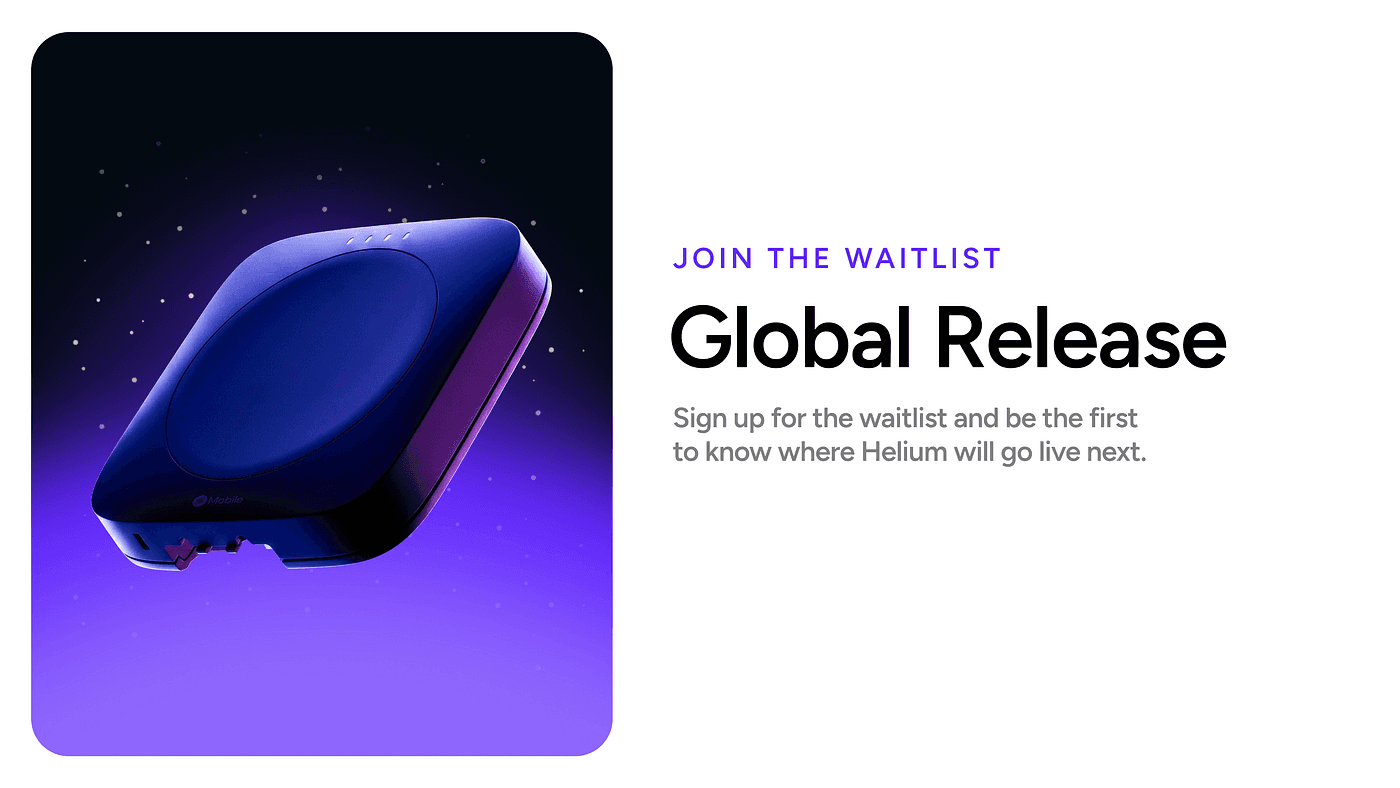
As part of Helium’s global efforts, we’re also opening up an International Waitlist, welcoming communities, enterprises, and deployment partners worldwide to share their interest in bringing the Helium Network to their region. The waitlist will help guide the next phase of mobile expansion, prioritizing locations where demand and community readiness are highest.
To share interest in bringing Helium to your country, sign up for the International Waitlist here and stay tuned for updates. Your country could be next!