Little Fish, Big Fish: How One Deployer Scaled From Barbershops to Airports
Decentralized LLC now spans four U.S. regions and offloads 80+ terabytes monthly by focusing on the businesses inside high-traffic venues.
Before founding Decentralized LLC, Omar Henry built a successful career in traditional finance, first as a banker, then as a financial advisor running his own practice. In 2021, he exited a logistics company he’d built and turned his attention to blockchain.
His next chapter began in 2023 with Helium Mobile Hotspots. Henry started deploying in small businesses: barbershops, salons, gas stations. The economics were simple. The returns were measurable. And the demand was real.
Today, Henry is the founder of Decentralized LLC, a deployment operation spanning the Northeast, Southeast, West Coast, and Midwest. The company supports 6 members and offloads approximately 80 to 85 terabytes of mobile data per month — equivalent to tens of thousands of hours of HD streaming, the kind of sustained usage typically seen in airports and transit hubs.
That makes sense, given that’s where Decentralized likes to operate.
The Model: Little Fish Catch Big Fish
Henry’s approach to growth is a little counterintuitive. Rather than pursuing top-down deals with large venues, he targets businesses inside those venues. A barbershop in a mall. A concession stand in a terminal. These operators already benefit from heavy foot traffic, and they’re often more receptive to a pitch that offers improved connectivity with no upfront cost, and some revenue.
“I don’t need a deal with Walmart,” Henry says. “I can get a deal with the barbershop that’s in the Walmart.”
That philosophy led to a turning point. After seeing Helium deployments appear at Baltimore-Washington International, Henry mentioned to a sales associate that airports weren’t out of reach. The associate found a barbershop inside Atlanta’s Hartsfield-Jackson terminal. Henry drove down, got a haircut, and installed a Hotspot the same day.
Within three months, Decentralized had expanded to LAX and begun conversations with concessionaires about a nationwide rollout to additional airports and train stations.
Why Small Business Still Matters
Even as the company scales into larger venues, Henry remains focused on independent hosts. For a neighborhood barbershop, an extra hundred dollars a month can offset a utility bill. It’s one less thing to worry about.
Decentralized shares revenue with every host and provides visibility into performance data. Crypto enters the picture only when relevant. Hosts can choose to be paid in fiat or tokens. That transparency goes a long way to foster trust in his professional relationships with his clients.
What Comes Next
In 2026, Decentralized is focused on scaling high-traffic infrastructure while maintaining its base of small business hosts. Henry’s story reflects a growing segment of the Helium community: deployers building real-world utility, one location at a time, starting with the little fish.
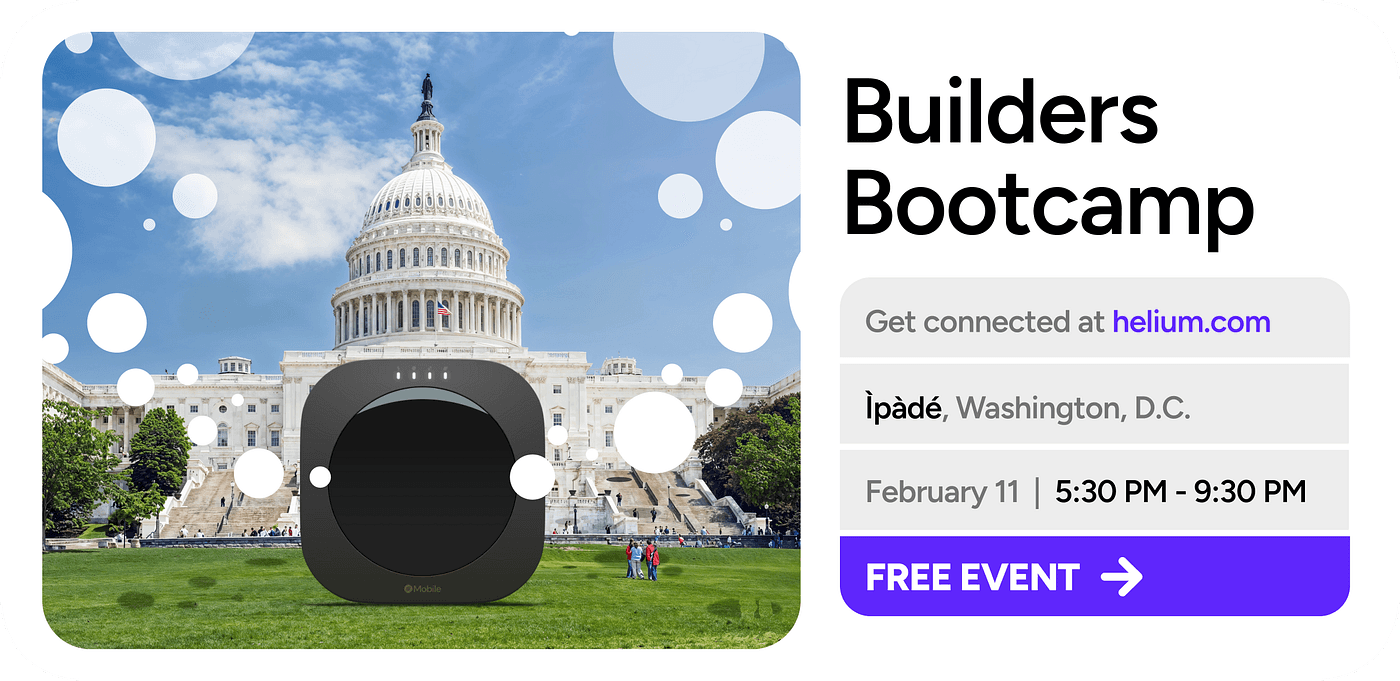
Omar Henry will be a guest speaker at an upcoming Helium Builders Bootcamp in Washington, D.C., a hands-on event for deployers at every stage.
Helium Builders Bootcamp — Washington, D.C.
Wednesday, February 11, 2026
5:30–9:30 p.m. EST
Register: luma.com/BuildersCamp