Why Carriers Need the Carrier Enablement Platform by HeliumOS
A carrier enablement platform, also called an MVNE (Mobile Virtual Network Enabler), is the infrastructure behind a carrier brand: subscriber onboarding, billing, SIM and eSIM provisioning, and regulatory compliance, delivered as one platform instead of systems each carrier builds in-house. The HeliumOS Carrier Enablement Platform packages that full stack and pairs it with native Helium Network integration. Here's why carriers are making the shift.
Telecom is stuck in a squeeze other industries have already worked through. While global carrier capex on network infrastructure runs past $200 billion a year (Dell’Oro Group), that spend is projected to decline roughly 2% in 2026. The industry needs intelligent connectivity solutions to meet rising demand, without the capex it takes for carriers to build that infrastructure themselves.
What is a carrier enablement platform (MVNE)?
E-commerce and software companies used to build their own bank integrations just to accept a payment: a merchant account, a gateway, weeks of setup on decades-old back-end systems. Stripe changed all of that with an API. The banks didn't go anywhere; the businesses just stopped building the integration themselves.
Enterprise IT made the same move with infrastructure. Companies stopped building and maintaining their own data centers and moved to the cloud.
HeliumOS, Helium's operating system for connectivity, is leading that same shift in telecom: putting subscriber management, billing, and compliance on one platform, instead of carriers building and owning every piece of that stack in-house.
An MVNE does for carriers what Stripe did for payments and the cloud did for enterprise IT. The brand keeps its customers, experience, and storefront, while the platform runs the engine underneath.
What's in the HeliumOS Carrier Enablement Platform
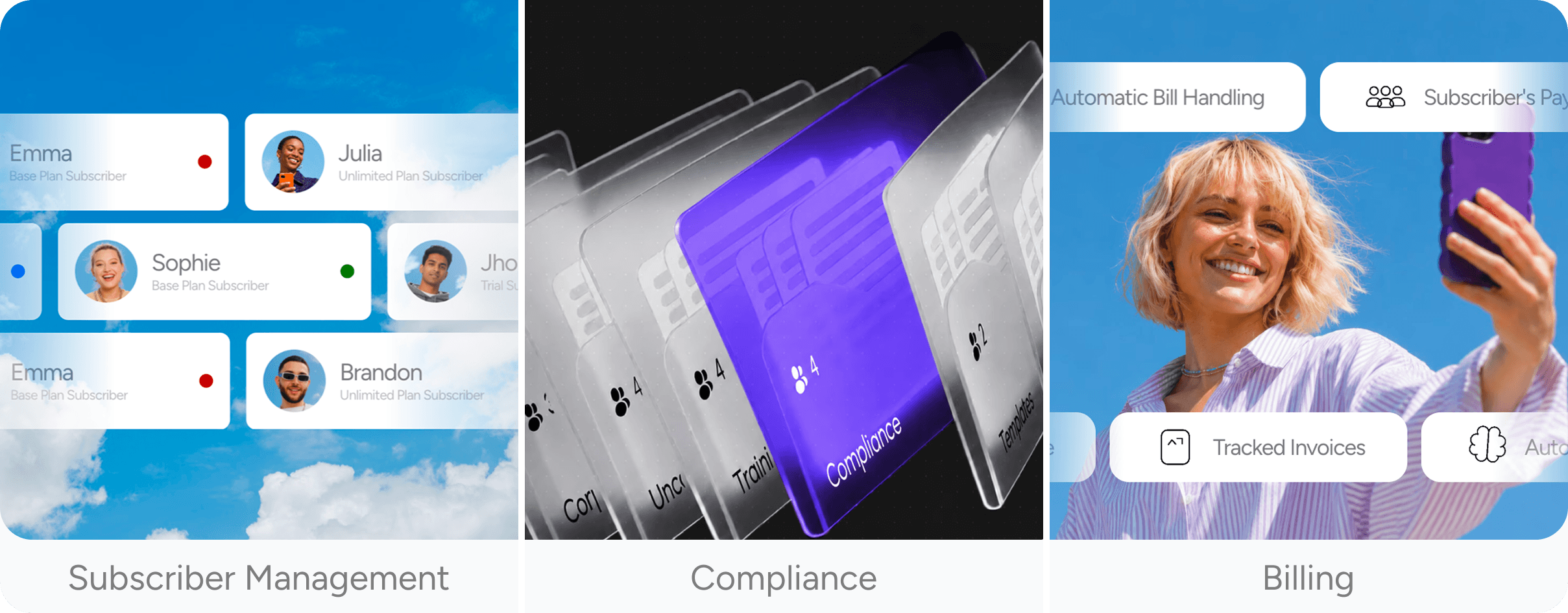
HeliumOS packages the full stack of carrier enablement into one product so carrier teams don’t have to reconcile fragmented systems:
Subscriber management that handles activations, port-ins, plan changes, and account locks against SIM swap and port-out fraud.
Billing that updates automatically as a subscriber's plan, add-ons, or status change.
Compliance built into onboarding and plan management.
How HeliumOS differs from other MVNEs
Most enablement platforms stop at back-office tools. HeliumOS pairs Carrier Enablement with native Helium Network integration, giving carriers a way to extend coverage into dense urban areas and indoor spaces where macro cellular struggles to reach, lowering the cost of Wi-Fi offload while adhering to carrier-grade quality-of-service standards.
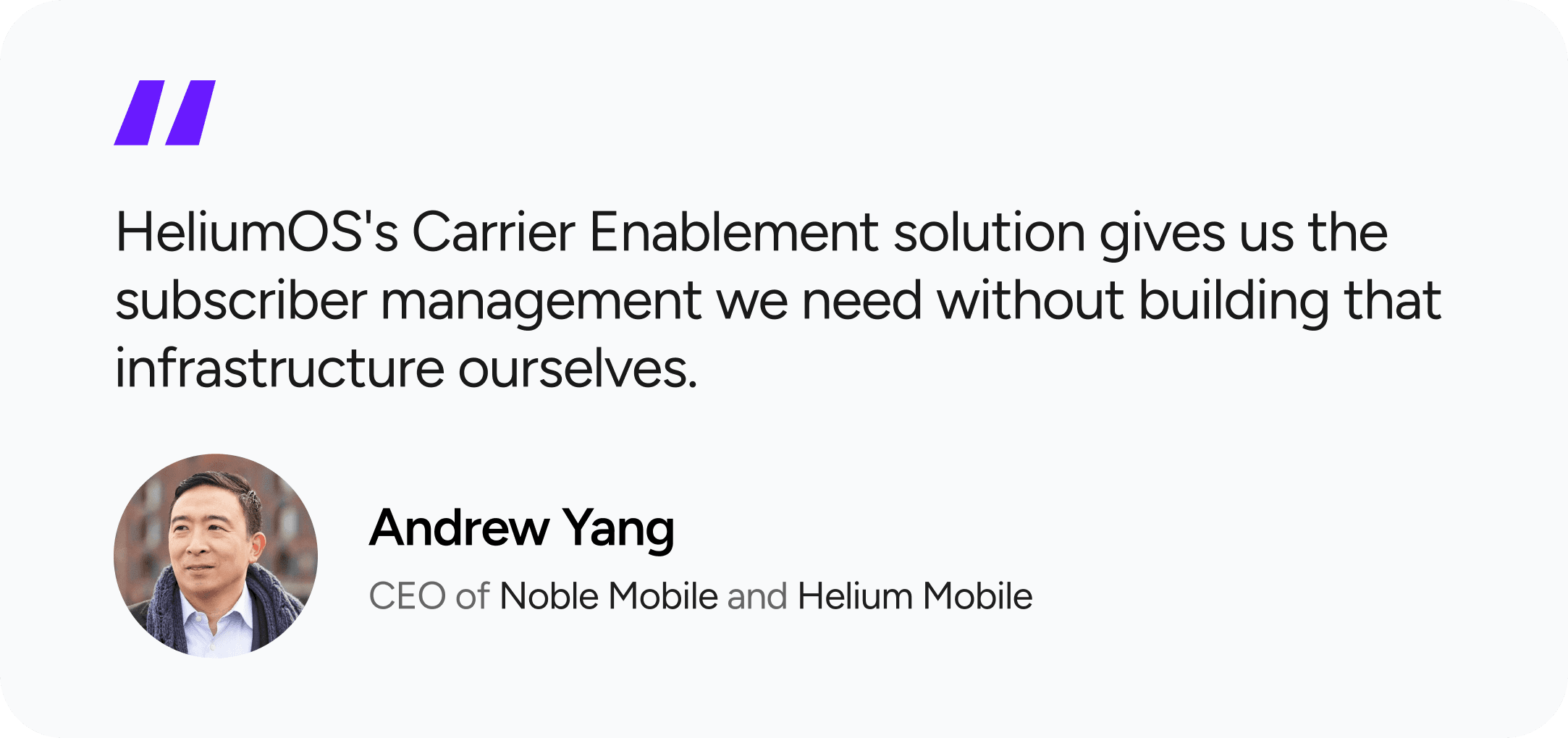
Andrew Yang, CEO of Noble Mobile and Helium Mobile, put it simply: "HeliumOS's Carrier Enablement solution gives us the subscriber management we need without building that infrastructure ourselves."
Why carriers use an MVNE instead of building in-house?
Building this stack in-house means integrating billing, provisioning, and compliance systems that take quarters to stand up and a permanent team to maintain, all before the first subscriber is activated. Regulatory requirements keep changing, and every change is engineering work the carrier owns in perpetuity. An MVNE turns that fixed cost into a platform relationship: launch in weeks, stay compliant by default, and put the engineering budget into customer experience instead of the plumbing.
If you're a carrier or a consumer brand weighing whether to launch mobile service for your customer base, the full breakdown can be found at helium.com/carrier-enablement. Or, reach out to the Helium team directly at business@helium.com.